
Choose from flexible, transparent financing solutions designed specifically for Nova Scotia homeowners. We partner with trusted lenders to make solar affordable.
Solar systems qualify as a home improvement investment, allowing homeowners to explore equity-based financing with competitive rates.
We work exclusively with established financial partners to ensure competitive rates and transparent terms. No hidden fees, no surprises—just honest financing solutions for Nova Scotia homeowners.
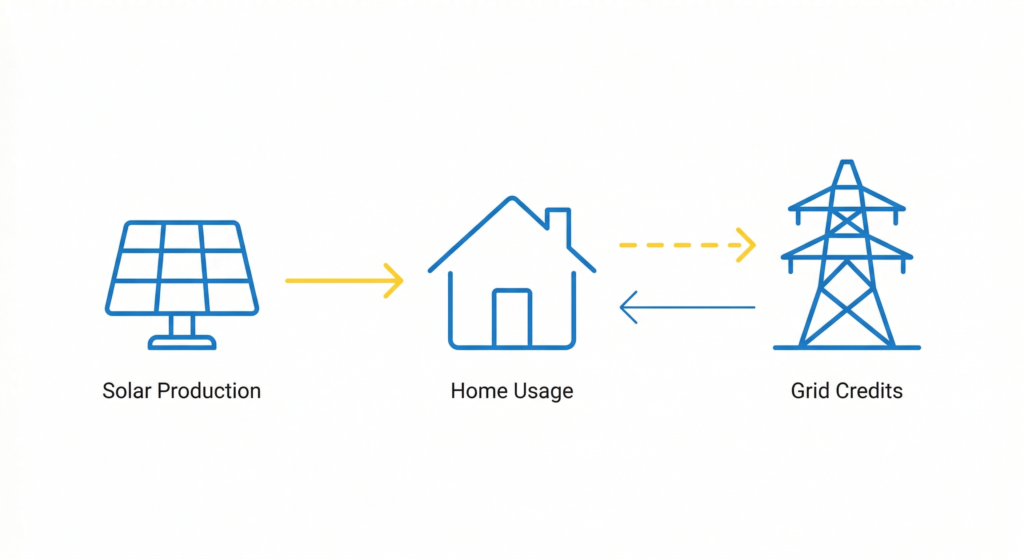
Your system generates electricity during daylight hours.
Your home uses the electricity it needs in real time.
Any unused electricity is sent back to the grid.
Nova Scotia Power records that surplus as credits on your account.
Those credits offset electricity usage during lower-production months, such as winter.
Nova Scotia Power offers a net metering program that allows homeowners to receive energy credits for excess electricity generated by their solar system.
Net metering in Nova Scotia operates on an annual basis, meaning energy production and consumption are balanced over the course of the year rather than daily. This structure allows summer surplus to offset winter usage.
Nova Scotia Power offers a net metering program that allows homeowners to receive energy credits for excess electricity generated by their solar system.
Net metering in Nova Scotia operates on an annual basis, meaning energy production and consumption are balanced over the course of the year rather than daily. This structure allows summer surplus to offset winter usage.

Got more questions? Click on Mini Rob
Yes. Many Nova Scotia homeowners finance solar through personal loans, home equity lines, or specialized solar financing programs. Options vary by lender and individual circumstances. We can help connect you with available financing partners.
Solar systems are generally viewed as home improvements. Many homebuyers value energy-efficient homes and predictable energy costs. Consult a real estate professional for specific information about your property.
Lenders typically consider factors such as credit history, income, debt-to-income ratio, and available home equity. Approval criteria vary by lender. We can help guide you toward financing options that align with your specific situation.
Net metering allows you to offset winter electricity usage with excess energy produced during the summer, helping maximize the value of your system over the course of the year. This structure can improve long-term savings and support greater energy independence.